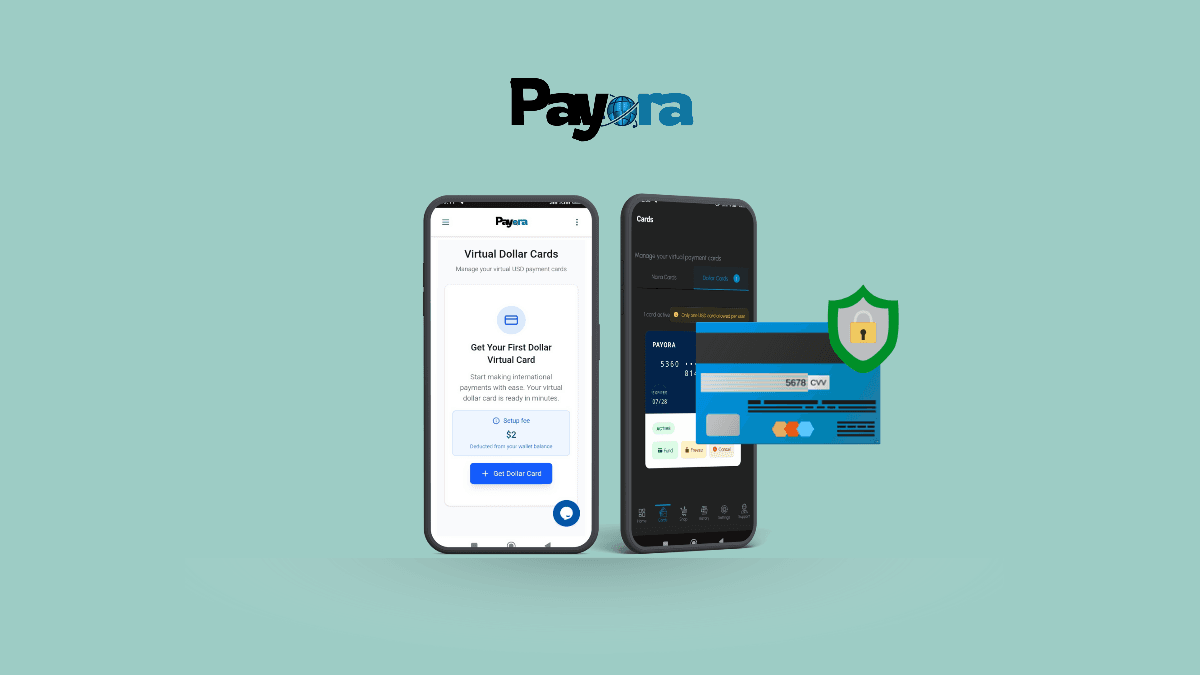
What Are Virtual Cards?
Just like the name implies, virtual cards are “virtual”. They are not like plastic cards, which exist in physical form; rather, they are digital cards that can be used to shop or transact online. Think of virtual cards like a digital version of your ATM card. It can be generated by your bank or on financial platforms like Payora.
When you create a virtual card, you also get unique card details such as a CVV number, card number, and expiration date. However, these personal details are different from those of your ATM card, which keeps your personal information hidden.
How Virtual Cards Work
- They can be generated easily within minutes using your bank app or other trusted fintech platforms like Payora
- After generating a virtual card, a unique card information containing your card number, CVV number, and expiry date will be created for you.
- The personal card details you have in your virtual card are different from those of your ATM card.
- You can always add funds to your card and make payments online by entering your card information as requested.
- Virtual cards are stored in digital formats. You can set transaction limits, track transactions, and cancel the card when needed.
Why Online Fraud Is A Major Problem
Before we dive into how virtual cards protect you from fraud, let’s have a clear picture of why online fraud is a major concern. Online fraud is a major concern due to its growing prevalence, evolving sophistication, and financial impact. According to Juniper Research, cumulative global merchant losses to online payment fraud are predicted to exceed $343 billion between 2023 and 2027. Online fraud is becoming increasingly sophisticated, with fraudsters leveraging highly advanced techniques to deceive unsuspecting victims. The FBI's 2024 IC3 Annual Report reveals that investment scams alone ranked up to $5.8 billion in losses, making up more than half of the crypto-related fraud. These statistics prove that online fraud isn’t just a local problem but a global concern.
Key Ways Virtual Cards Protect You From Fraud
Now that we have an idea of why online fraud is a major problem and global concern, let’s take a look at the role virtual cards play in giving you an extra layer of security and keeping you safe while you transact online.
- Merchant Specific Cards: You can create merchant-specific cards to limit transactions to specific retailers. If the retailer's database is hacked, the virtual card linked to that merchant can be deactivated immediately without affecting other accounts.
- Isolation of Personal Information: Your virtual card is not linked to your primary bank account. Even if a virtual card has been compromised, hackers cannot gain access to your main financial accounts or personal data.
- Instant Freeze or Delete Option: Unlike physical cards, which take time to block or replace, virtual cards can be frozen or deleted instantly. If you notice any suspicious activity, you can easily shut it down in seconds without affecting your main bank account.
- Spending Limits For Extra Safety: Some virtual cards allow you to create daily, weekly, or monthly limits. You can control your spending limits to prevent overspending and also limit potential damage in the case of a compromised card. This means that, unlike your bank account, where you have all your savings, you can fund your virtual accounts with the amount you need when needed. Even if someone tries to misuse your card, the amount they can access is capped.
- Single-Use or Limited-Time Cards: Some virtual cards are designed for one-time transactions. After you have made a payment, the virtual card becomes invalid and completely useless to scammers if stolen.
Final Thoughts
Virtual cards are a powerful tool in the fight against online fraud, offering layers of security that traditional cards simply cannot match. By masking your personal information, enforcing controls, and enabling quick responses, they empower you to shop confidently. As cyber threats evolve in 2025, adopting virtual cards is a smart and essential choice.
While many bank apps and financial platforms offer virtual cards, the Payora virtual card is designed to meet the unique needs of today's digital users. With Payora, you can create a secure virtual card in minutes, fund your card easily, freeze it, and even delete your card instantly. Payora is built for secure online payments, helping you stay one step ahead of fraud while giving you full control of your finances.