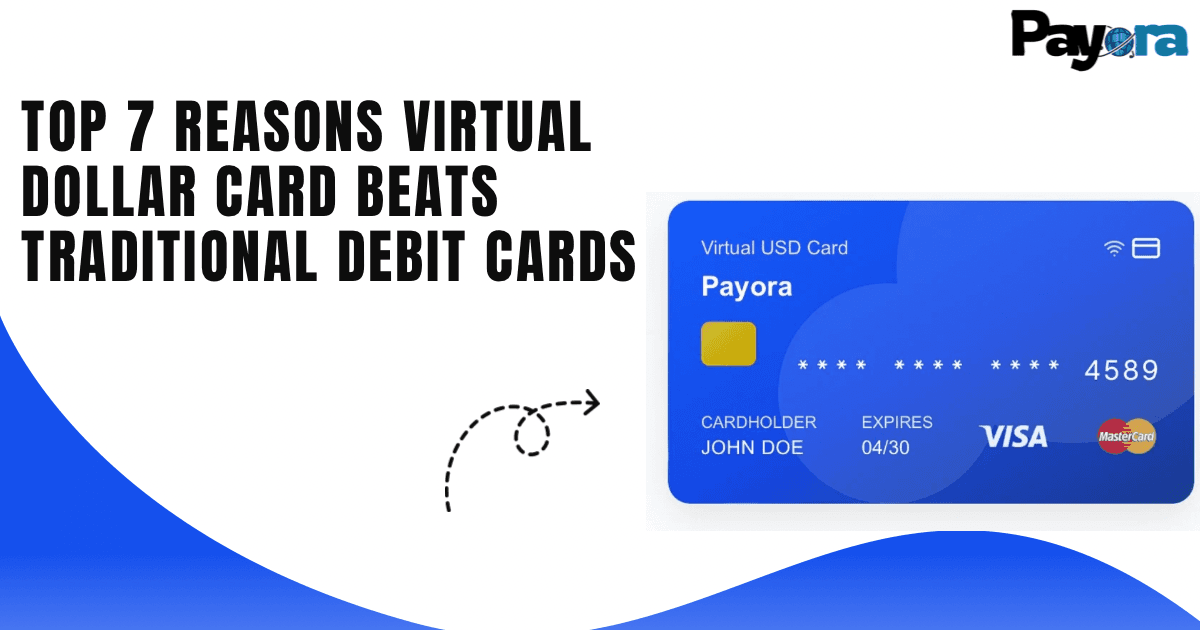
Payora's virtual dollar card was built specifically to solve this problem. It gives you a reliable, instant, and affordable way to make international payments from Nigeria without the declines, delays, and hidden charges that come with traditional bank debit cards.
If you are weighing your options and wondering whether a virtual dollar card is actually worth it, this guide breaks down the top seven reasons why Payora's virtual dollar card is a smarter choice than your regular bank card in 2026.
At a Glance: Virtual Dollar Card vs Traditional Bank Debit Card
Before diving into the details, here is a quick comparison of how Payora's virtual dollar card stacks up against a typical Nigerian bank debit card for international transactions.
| Feature |
Payora Virtual Dollar Card |
Traditional Bank Debit Card |
| International acceptance |
Accepted on most global platforms |
Frequently declined on international sites |
| Card creation time |
Instant — minutes inside the app |
Days to weeks, requires bank visit |
| Monthly maintenance fees |
None |
₦50 – ₦200+ monthly |
| Hidden charges |
None |
SMS alerts, maintenance, FX markups |
| Funding method |
Naira via bank transfer, USSD, or wallet |
Requires domiciliary account or FX allocation |
| Security control |
Freeze/unfreeze anytime, wallet-linked only |
Limited control, linked to main bank account |
| Best for international payments |
Yes — purpose-built |
No — built for domestic use |
| Card management |
Full control from your phone |
Limited to banking app features |
Now let's break down each advantage in detail.
1. It Actually Works on Global Platforms Without Getting Declined
This is the single biggest reason Nigerians are switching to virtual dollar cards in 2026, and it is the most important difference between Payora and your regular bank debit card.
Traditional Nigerian naira debit cards are rejected by the majority of international websites, payment gateways, and subscription services. Whether you are trying to pay for Spotify, Netflix, Coursera, Canva Pro, Apple subscriptions, Amazon purchases, or digital advertising platforms, local bank cards fail more often than they succeed on international transactions.
The reason is structural. Most global platforms process payments in US dollars through international payment networks. Nigerian banks impose foreign exchange restrictions, daily spending caps, and outright blocks on certain categories of international transactions. Even when your card is technically enabled for online payments, the transaction is often flagged, held, or declined by the bank's fraud prevention systems.
Payora's virtual dollar card is designed from the ground up for international payments. It is denominated in US dollars, issued on globally accepted card networks, and optimized for exactly the types of transactions that Nigerian bank cards struggle with.
This means you can pay for subscriptions, software, online courses, advertising, hosting, and digital services without worrying about whether the payment will go through. If you have ever had to ask a friend abroad to pay for something on your behalf, you understand how valuable this reliability is.
Payora works where Nigerian bank cards do not. That alone makes it worth considering.
2. You Can Create Your Card Instantly — No Bank Visits, No Paperwork, No Waiting
Getting a debit card from a traditional Nigerian bank is a process most people would rather avoid. You visit the branch, fill out forms, provide documentation, wait for processing, and then return days or weeks later to collect the physical card. Some banks require activation calls or in-branch PIN resets before the card is even usable.
Payora eliminates all of that.
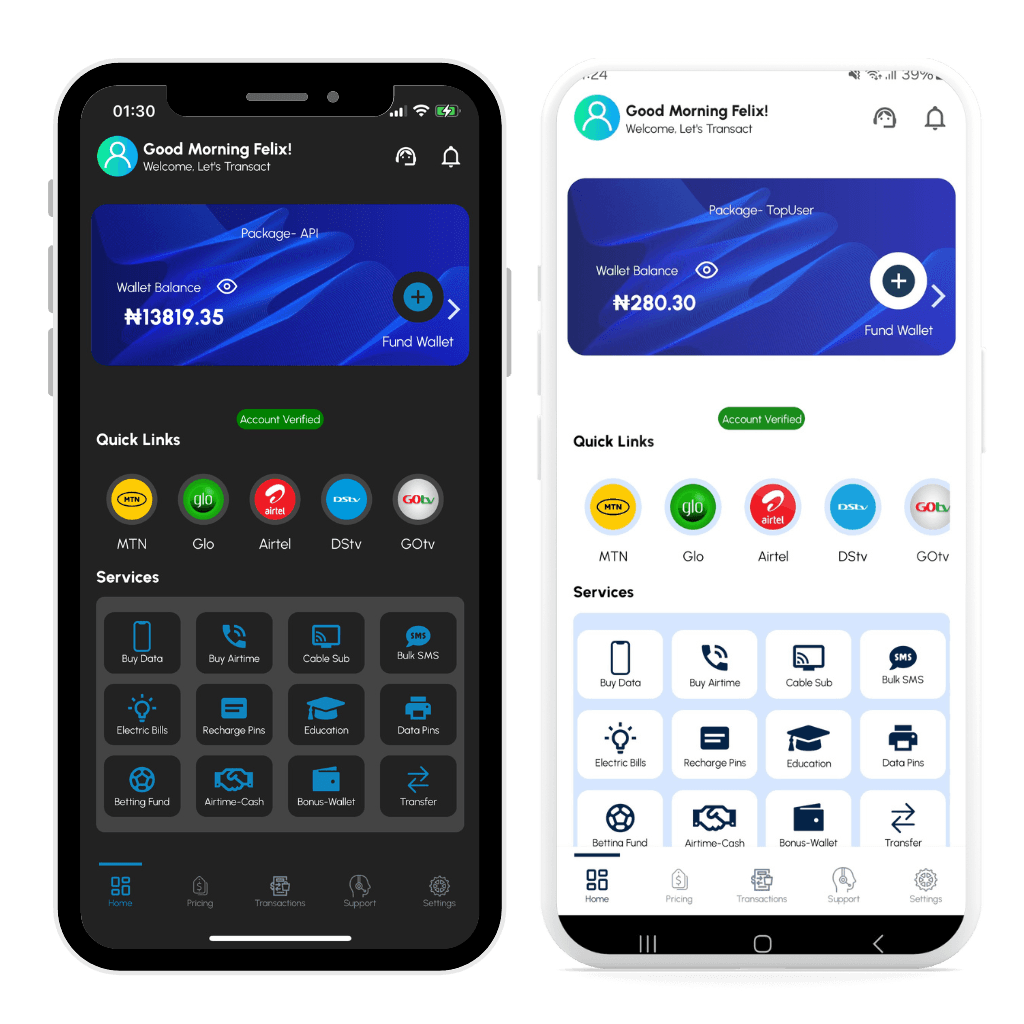
You create your virtual dollar card directly inside the Payora app in minutes. There is no physical branch visit, no paperwork, no waiting period, and no activation delays. You download the app, complete your registration, fund your wallet, and your virtual dollar card is ready for immediate use.
The entire process from download to first payment can happen in under ten minutes. For freelancers who need to pay for a tool right now, students registering for an online course before a deadline, or marketers who need to launch Facebook ad campaigns today, that speed makes a real difference.
Card Creation: Payora vs Traditional Bank
| Step |
Payora |
Traditional Bank |
| Download and registration |
2 – 3 minutes |
N/A |
| Identity verification |
Instant to same-day |
1 – 3 business days |
| Card issuance |
Instant |
3 – 14 business days |
| Card activation |
Automatic |
Requires branch visit or call |
| Ready for international use |
Immediately |
Often requires additional FX activation |
| Total time to first payment |
Under 10 minutes |
1 – 3 weeks |
3. Your Money Is Safer with Payora's Security Architecture
Every time you enter your traditional bank debit card details on a website, you are exposing your primary bank account to potential risk. If the merchant's system is compromised, if your card details are intercepted, or if a subscription you forgot about continues charging you, the money comes directly from your main bank account.
Payora's virtual dollar card works differently. It is linked only to your Payora wallet, not to your primary bank account. This creates a protective layer between your savings and the internet. Even in a worst-case scenario, only the funds in your Payora wallet are at risk — not your entire bank balance.
Beyond this structural advantage, Payora gives you granular security controls that most bank cards simply do not offer.
| Security Feature |
Payora Virtual Dollar Card |
Traditional Bank Debit Card |
| Freeze and unfreeze instantly |
Yes — one tap in the app |
Limited or unavailable |
| Wallet-only funding |
Yes — separated from bank account |
No — linked to main account |
| Real-time transaction alerts |
Yes |
Delayed SMS, often inconsistent |
| Spending limit controls |
Yes — you set the limit |
Fixed by bank policy |
| Card details visible only in-app |
Yes |
Printed on physical card |
The ability to freeze your card instantly is especially valuable. If you notice a suspicious transaction or simply want to pause your card between uses, you can freeze it with a single tap and unfreeze it when you are ready to pay again. Try doing that with a traditional bank card at 11 PM on a Sunday night.
4. No Monthly Maintenance Charges or Hidden Fees
Nigerian banks are known for accumulating small charges that add up significantly over time. Monthly card maintenance fees, SMS alert charges, VAT on electronic transfers, stamp duty deductions, and various other line items quietly reduce your balance month after month, whether you use the card or not.